

I Took Notes to My First Academic Conference. Then I Stopped Needing Them
In August, I found myself standing in an amphitheatre at Istanbul University, preparing to speak at my first ever international academic conference.
If you had told me some time ago that I would be presenting research in front of academics from around the world, I am not sure I would have believed you.
I work directly with communities. My everyday role at Community Renewal Trust Rom Romeha in Glasgow involves employability and welfare support, helping people navigate systems that can often feel complicated, inaccessible or simply exhausting.
Academia felt like another world.
So arriving at the International Geographical Union Regional Conference 2026 in Istanbul, held within the historic campus of Istanbul University, was exciting and, at first, slightly overwhelming. The university itself added to that feeling. Situated in Istanbul's historic peninsula, its extraordinary architecture and history made it difficult not to feel the importance of the place.
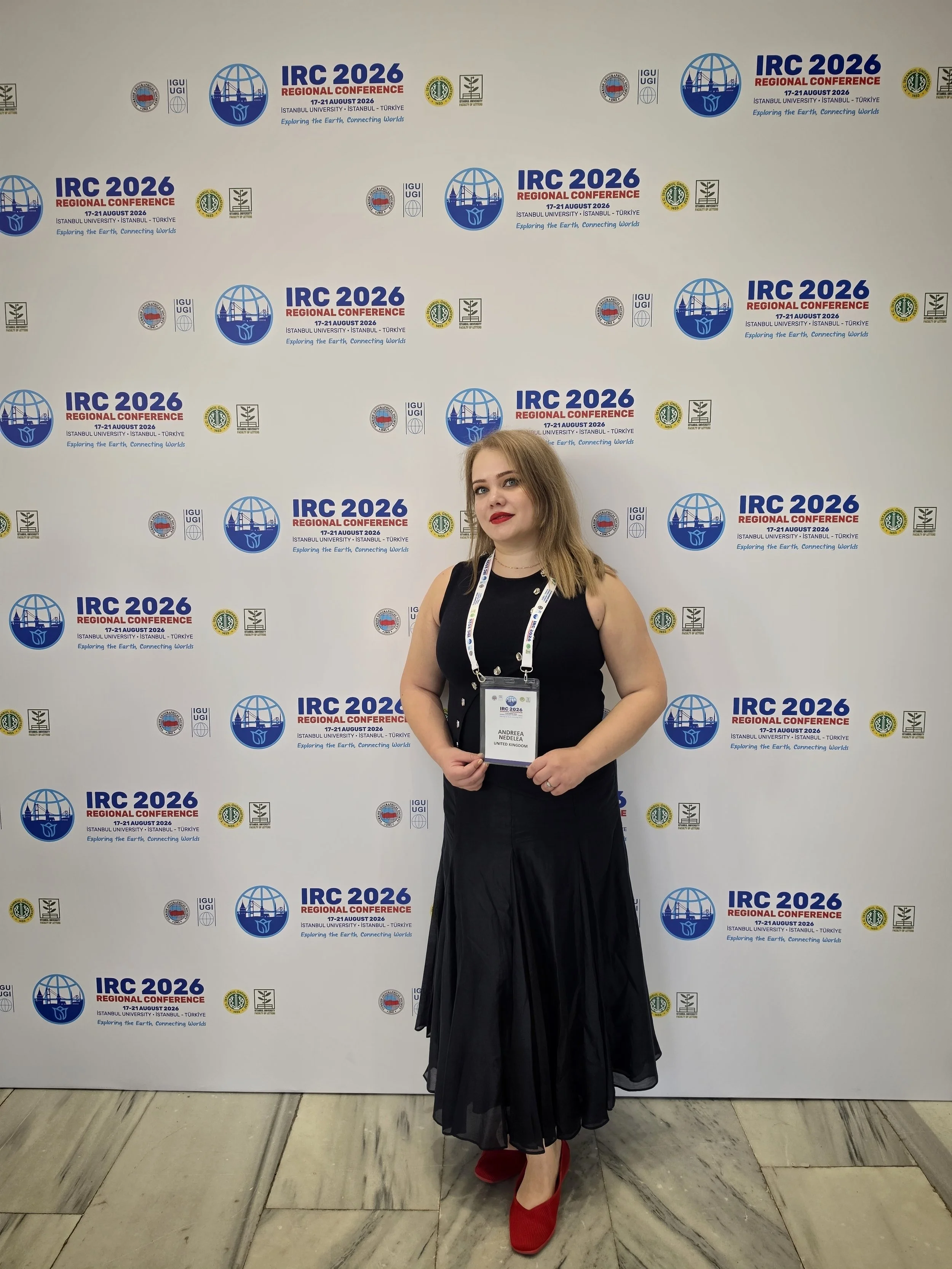
And then there was the programme.
I listened to researchers speaking about communities and experiences from across the world. Some of the research was incredibly difficult to hear — including work with women who had experienced rape linked to drug cartels in Panama, and research with homeless road workers in the Himalayas. These were powerful stories of violence, exploitation, homelessness, migration and survival.
Sitting there, I remember thinking that our RomaPlaceAge project somehow felt very small in comparison.
And at exactly the same time, incredibly important.
Then something unexpected happened
When it was our turn to present, the nerves were there.
I had my notes.
I knew what I was supposed to say.
But once I started talking about the work, something changed.
I stopped looking at the notes.
The words just came.
Because I knew this subject.
Not because I had memorised a presentation, but because I had lived this work alongside the people involved in it.
That was probably the biggest lesson I brought home from Istanbul: when you care deeply about something and know why it matters, you find your voice — even when the people sitting in front of you are an amphitheatre full of academics.
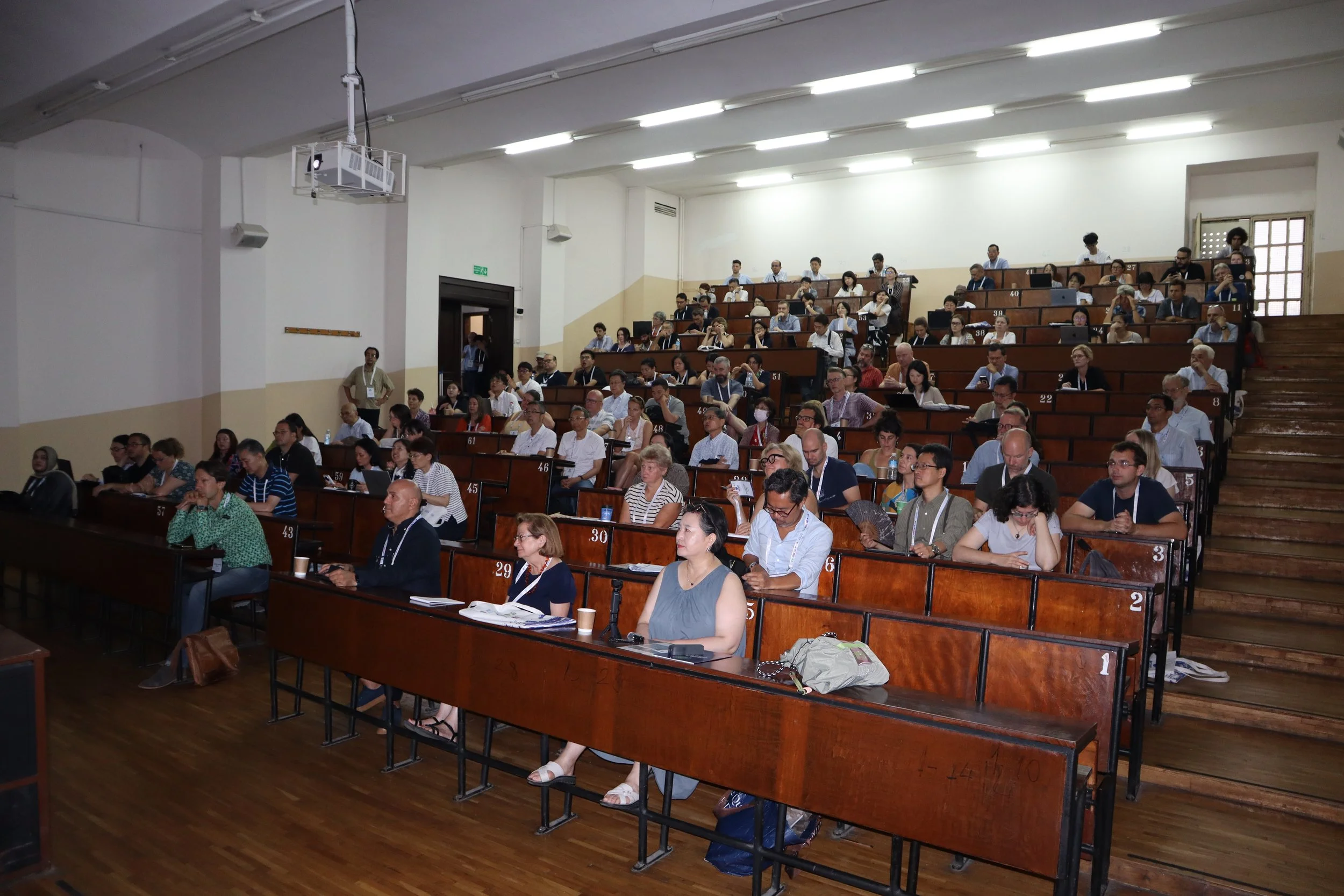
Strabo Room at Istanbul University
I also discovered something else. The academics I met were warm, curious and welcoming. As someone coming into that environment from outside academia, I had probably built up an image in my head of what an international research conference would be like.
The reality was much more human.
People wanted to talk. They wanted to learn. They asked questions. They shared experiences.
And our experience from Glasgow had something valuable to contribute.
Research that begins with trust
Our presentation focused on RomaPlaceAge, a project exploring how places and spaces can better support healthy ageing and reduce exclusion and marginalisation for Roma communities aged 40 and over. The work takes place across Glasgow, Luton and Peterborough, with Roma community members involved as equal partners and co-researchers rather than simply being treated as research participants.
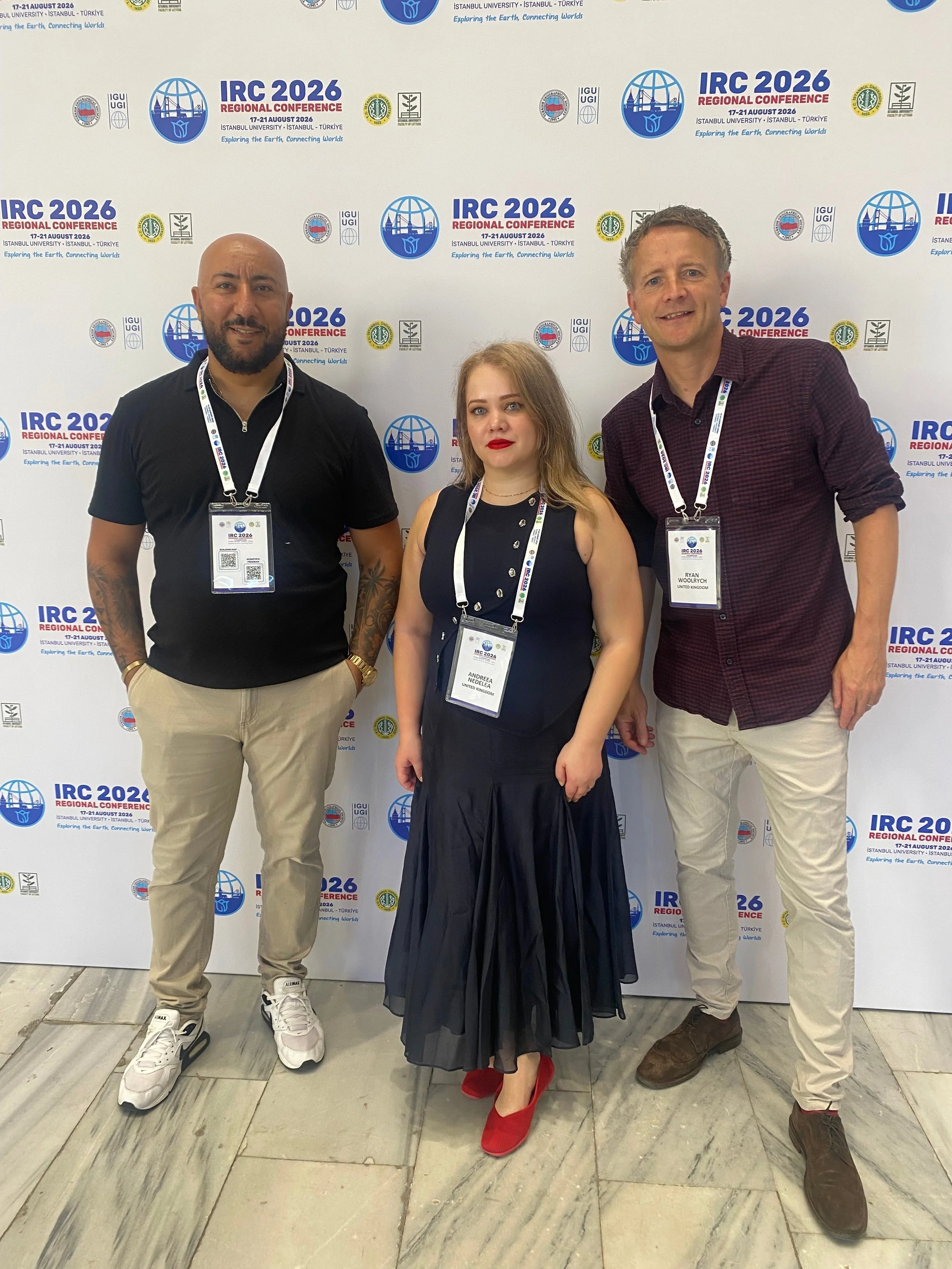
From left to right: Marek Balog, Andreea Nedelea of Community Renewal Rom Romeha, and Dr Ryan Woolrych of Heriot-Watt University, representing the RomaPlaceAge team at the IRC conference in Istanbul.
Twenty-six Roma community members were trained as co-researchers across the project, taking part in interviewing, mobile and visual research, mapping and storytelling. They were involved not only in gathering information but in its design and interpretation.
For me, though, one word sits underneath all of this:
Trust.
The research in Glasgow could not have happened without it.
Our organisation did not suddenly enter a community because a research grant had been awarded. Relationships already existed through years of welfare, employability and community support.
That matters.
Many of the people we work with have experienced services making promises and then disappearing. When that happens repeatedly, asking somebody to trust another organisation, researcher or institution is not a small request.
Trust has to be earned.
And then it has to be maintained.
The presentation captured this very simply: trust is built at community pace, not project pace.
I think that sentence should be written into far more funding applications.
Because relationship-building does not conveniently happen between the official start and end dates of a project.
It happens through answering a phone call.
Through checking in.
Through a WhatsApp message.
Through remembering what somebody told you the week before.
Through being there when the issue they need help with has absolutely nothing to do with the research.
We maintain groups and conversations in Romanian, Slovak and English. Sometimes co-researchers call us every day. We might begin a conversation about an interview or workshop and end up helping with housing, benefits, employment or another difficulty
happening in that person's life.
The welfare work does not stop because the research has started.
In many ways, it is what makes the research possible.
These everyday relationships are often invisible when a project is written down on paper, yet they require enormous amounts of time and emotional energy. Our conference presentation made the same point: recruitment, training, translation and relationship-building consume time that research grants rarely fully recognise or cost.
When research rules meet real life
Working this way has also made me think differently about research ethics.
Academic research often assumes that protecting somebody means keeping them anonymous.
But what happens when people do not want to be anonymous?
Some of our community members were proud of their contribution. They wanted their photographs included. They wanted their names attached to their work. They wanted their families and their community to be visible.
At the same time, a traditional signed consent form could create distrust for people who were uncomfortable signing official documents.
So the process had to adapt.
That is where genuine co-production becomes very different from simply consulting a community.
The question becomes not “How do we persuade people to participate in our research process?”
It becomes:
“How does the research process need to change so that people can participate on their own terms?”
Our presentation described precisely this tension: institutional ideas about privacy, anonymity and representation did not always align with community priorities. Storytelling and co-design helped shift those relationships, giving community members greater control over how their experiences were communicated.
RomaPlaceAge has used approaches including interviews, walking interviews, photo diaries, community mapping and co-designed storytelling.
Storytelling became particularly powerful.
Instead of repeatedly asking Roma people to explain their lives to policymakers, we could create situations where policymakers had to step into somebody else's experience for a moment.
Recent RomaPlaceAge storytelling workshops have done exactly that, using episodes based on research findings and pausing them at key moments so community members, services and policymakers could discuss what might create a different outcome.
That changes who is expected to do the work of understanding.
Being a community researcher is not easy
One part of our presentation that matters enormously to me was the experience of the co-researchers themselves.
Traditional researchers may enter a community, conduct an interview and eventually leave.
Our co-researchers cannot do that.
They go home.
They may have interviewed their neighbour, their cousin, an elder they respect or someone whose children know their children.
They may hear somebody describing discrimination that mirrors their own experiences.
And the relationship continues long after the recorder is switched off.
That creates an emotional responsibility that is easy to overlook.
As our presentation explained, community co-researchers occupy two positions at once: researcher and community member. Interviewing friends, relatives and neighbours creates obligations extending beyond the life of the project, while hearing experiences reflecting their own lives can carry a considerable emotional cost.
That is why regular mentoring, supervision, debriefing and simply having somebody available to talk to are not optional extras.
They are part of doing this work ethically.
Sometimes working inside a community is much harder than researching it from outside.
What Istanbul taught me
I went to Istanbul thinking mostly about whether I would manage to speak confidently at an academic conference.
I came home thinking about something much bigger.
I realised that expertise comes in different forms.
There is academic expertise.
There is professional expertise.
And there is lived and community expertise.
Good research needs all three.
RomaPlaceAge is trying to put that principle into practice. Its purpose is not simply to research Roma communities but to work in equal partnership with them, including through community co-researchers who help determine the questions, methods, interpretation and representation of the research.
The presentation summed this up beautifully: cultural knowledge and community trust opened doors that university researchers alone could not, and co-researchers influenced not only who was asked, but what counted as a finding.
That is powerful.
And perhaps that is why, once I started speaking in Istanbul, I stopped needing my notes.
I wasn't trying to sound like an academic.
I was talking about people I know, relationships I have helped build and work I believe in.
And then there was Istanbul itself
Outside the conference rooms was one of the most extraordinary cities I have ever experienced.
Istanbul somehow feels enormous and intimate at the same time. History is everywhere, but so is everyday life: busy streets, ferries crossing the Bosphorus, cafés and conversations, the call to prayer travelling across the city, cats appearing everywhere, and Europe and Asia facing one another across the water.
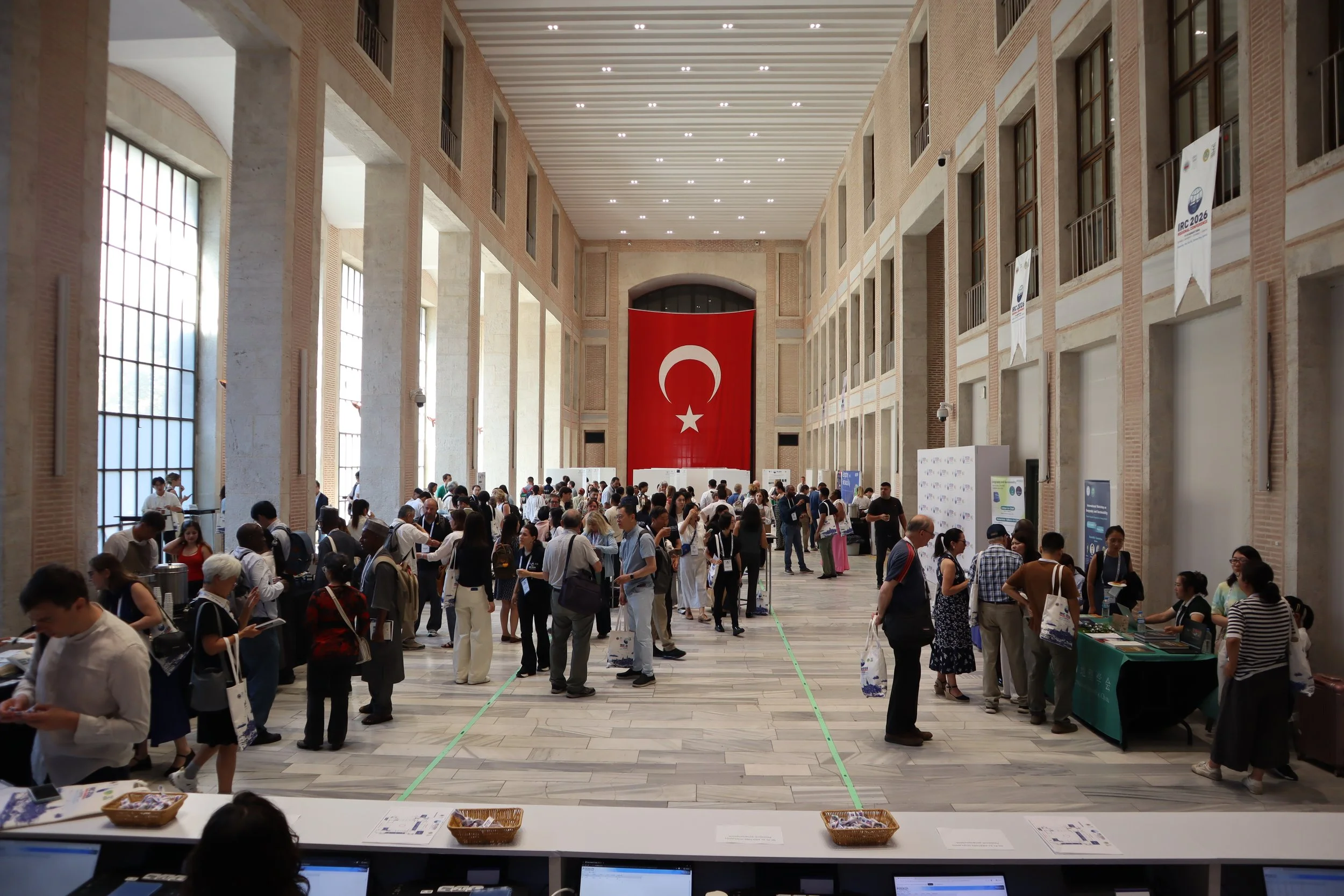
Holding an international conference about people, place and geography there felt particularly appropriate.
IRC itself was designed as a meeting point for geographical research from around the world and as an opportunity for people from different places and disciplines to exchange knowledge and build collaborations.
For somebody attending her first academic conference, it was quite a place to begin.
I returned to Glasgow grateful for the experience, proud of our co-researchers, and with much more confidence in something I perhaps should have known already:
you do not have to leave your experience at the door when you enter an academic space. Sometimes that experience is exactly what the room needs to hear.
And the more I work on RomaPlaceAge, the more convinced I become of another lesson:
Meaningful community research does not begin with data. It begins with relationships.
And relationships take time.