

When I first started working in Govanhill six years ago as a welfare adviser, I thought my job would mainly involve helping people navigate complicated systems—benefits, housing, health appointments and paperwork. It did. But over time, I realised my work was never really about forms or applications. It was about people.
Every day I met Romanian Roma families facing financial hardship, health concerns, discrimination and uncertainty. Those conversations were often difficult. Slowly, relationships developed. The people I first met through welfare appointments became familiar faces, trusted contacts and, eventually, friends.
When the opportunity came to invite members of the Romanian Roma community to become co-researchers for the RomaPlaceAge project, I hoped they would enjoy participating. I imagined they would appreciate meeting new people and contributing to something meaningful. What I didn't expect was to witness something much deeper: people beginning to recognise the value of their own experiences, their own knowledge and the influence they could have within their community.
One comment stayed with me throughout the project because I heard it again and again, in different ways, from different people.
They appreciated finally being asked what they thought.
It sounds simple.
But for many people, it was anything but.
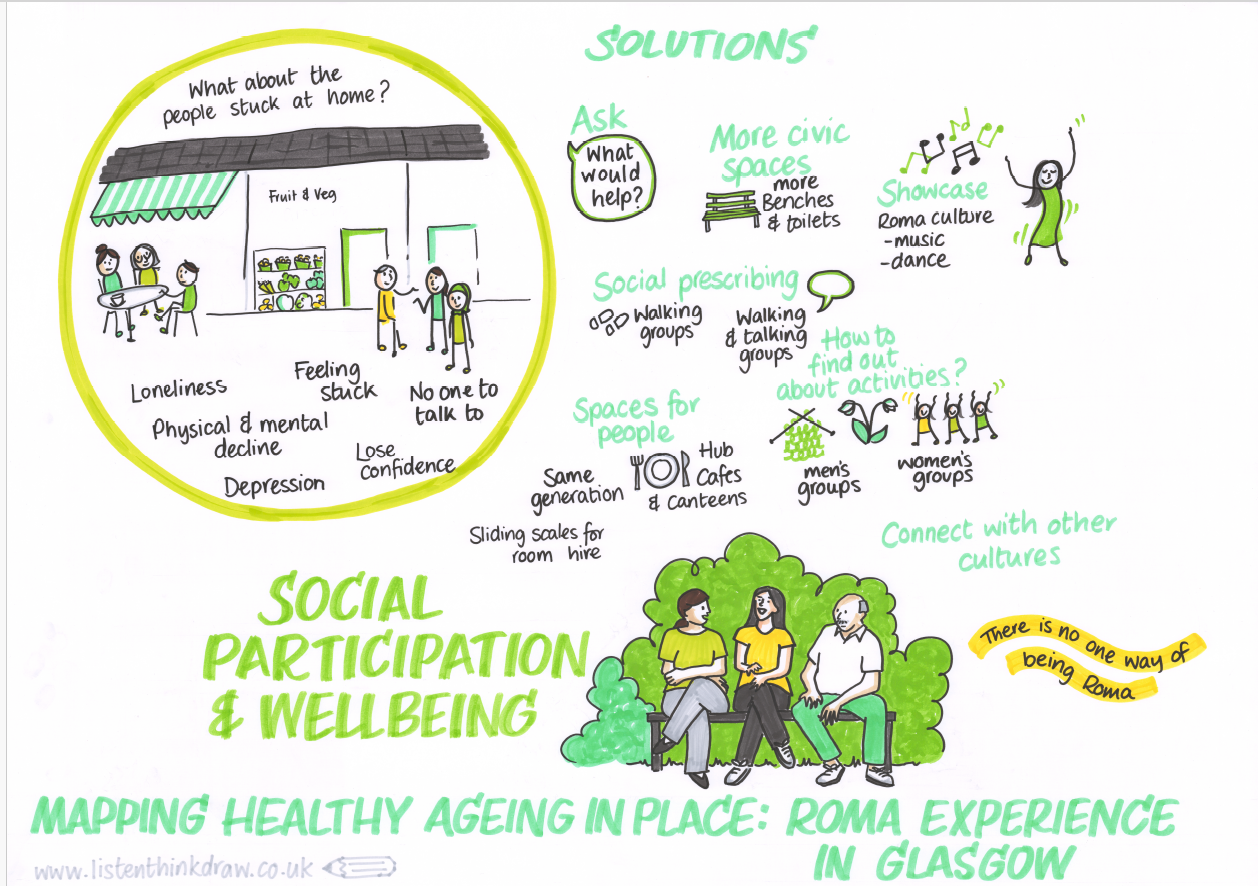
Graphic illustration by Clare Mills from the storytelling event in Glasgow, 5 June 2026.
So many interactions with institutions ask people to explain problems, provide evidence, justify circumstances or seek help. Rarely are they asked to share their experiences because those experiences matter in their own right.
RomaPlaceAge created something different.
For the first time, many participants were not entering a room as service users, welfare claimants or people needing support. They entered as co-researchers. Their stories were not viewed as problems to solve but as knowledge worth listening to. They were treated as equals, encouraged to question, reflect and contribute, knowing that what they shared could influence how others understand their community.
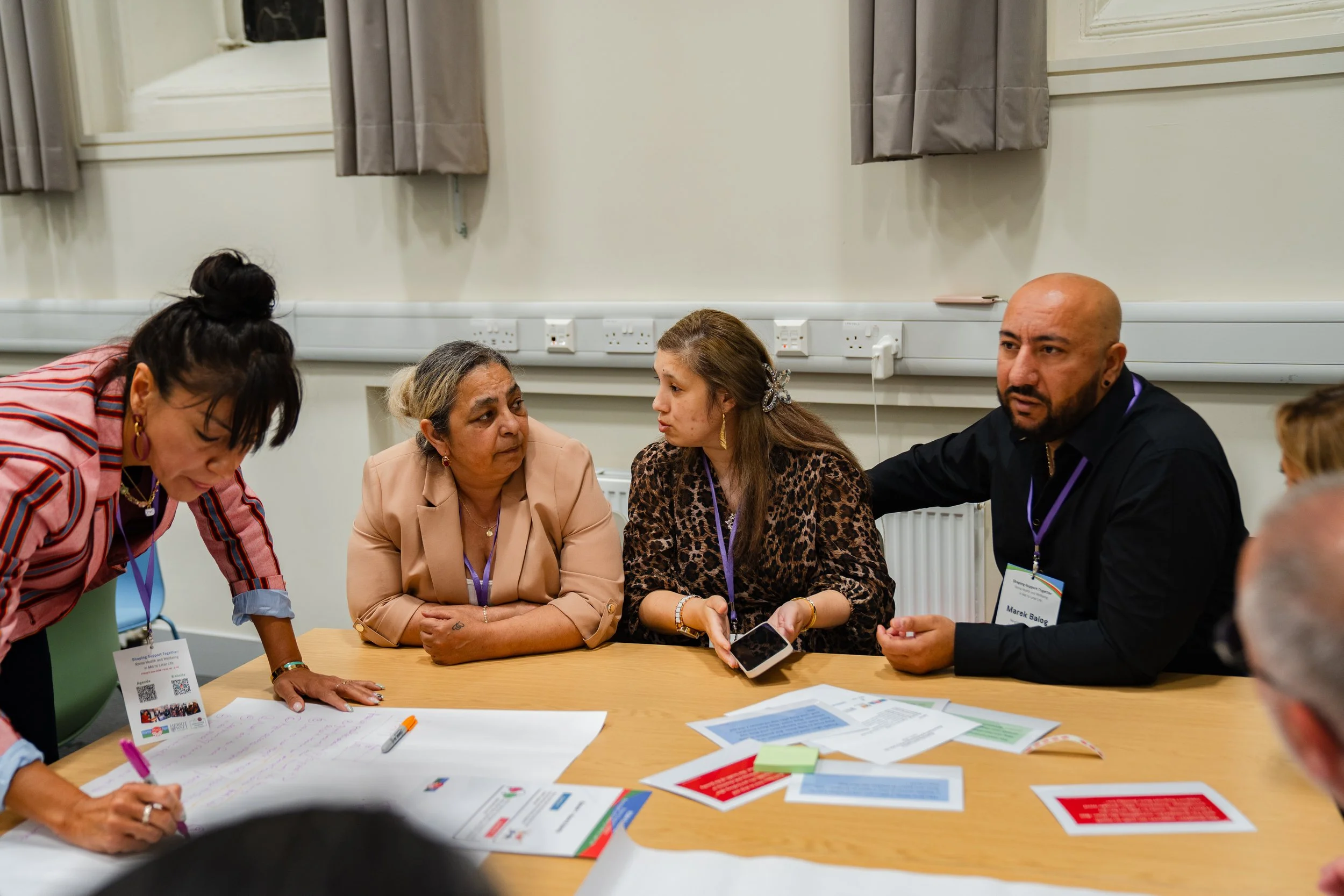
From left to right: Rosa Cisneros, Dana Balogova, Marianna Balogova, and Marek Balog.
Watching that happen reminded me that meaningful participation isn't about giving people a voice—they already have one.Sometimes it is about creating spaces where that voice is genuinely listened to.
Over the months, I noticed confidence growing in ways that were subtle but unmistakable. People who had initially been hesitant to speak began contributing more freely. They encouraged one another, reflected on each other's stories and gradually became more comfortable expressing opinions in front of others. There wasn't a single dramatic moment where everything changed. Instead, confidence grew conversation by conversation, workshop by workshop.
One example that continues to inspire me is Florin Covaci.
During the project he spoke passionately about supporting his community. Shortly afterwards, he organised fundraising that enabled the construction of a small church for the Romanian Roma community in Romania. Seeing that happen reminded me that leadership had always existed within the community. The project did not create leaders. It created opportunities for people to recognise the leadership they already possessed and the difference they were capable of making when they believed their ideas mattered.
Perhaps what surprised me most was seeing another side of people I thought I already knew.
As a welfare adviser, I usually meet people during some of the most difficult moments in their lives. Our conversations are often about hardship, paperwork or crisis.
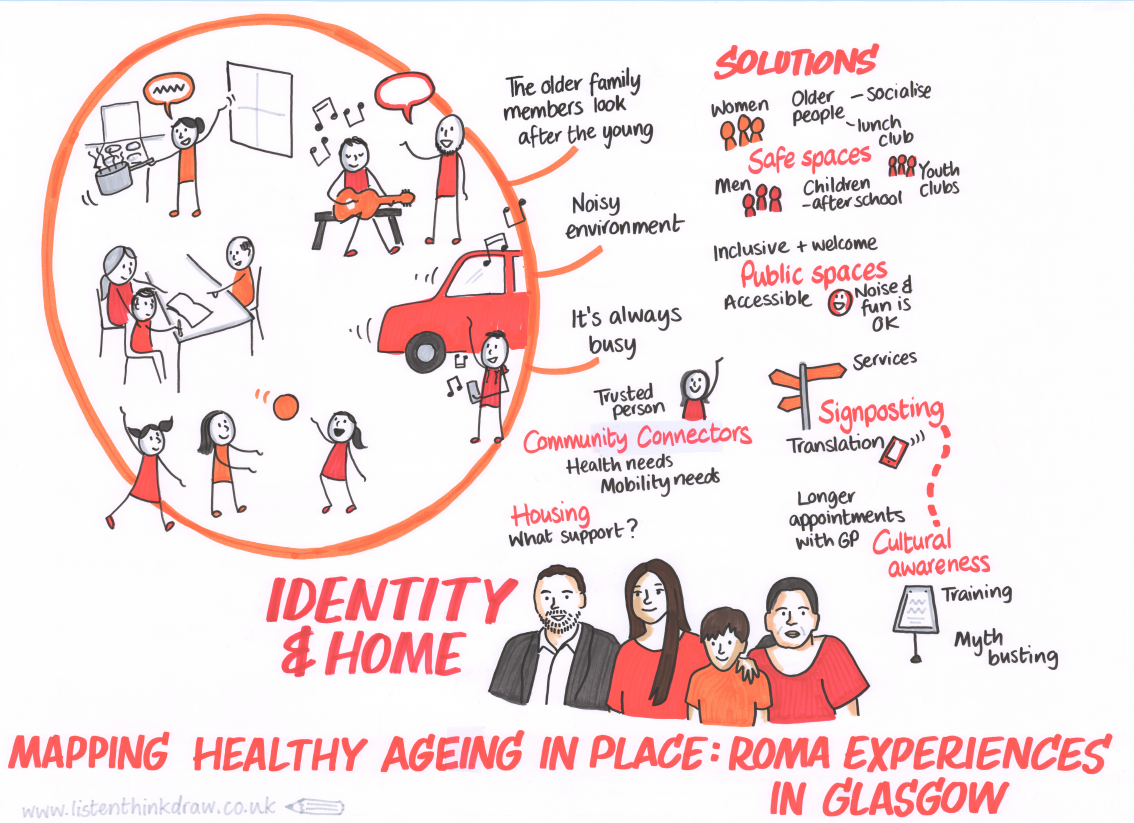
Graphic illustration by Clare Mills from the storytelling workshop in Glasgow, 5 June 2026.
My observation on our preparation for the Storytelling workshop in Glasgow, June 5th, at the Ramshorn, University of Strathclyde.
During the preparatory storytelling workshops I saw something entirely different.
I saw people laughing.
Playing games.
Sharing memories.
Teasing one another.
Relaxing.
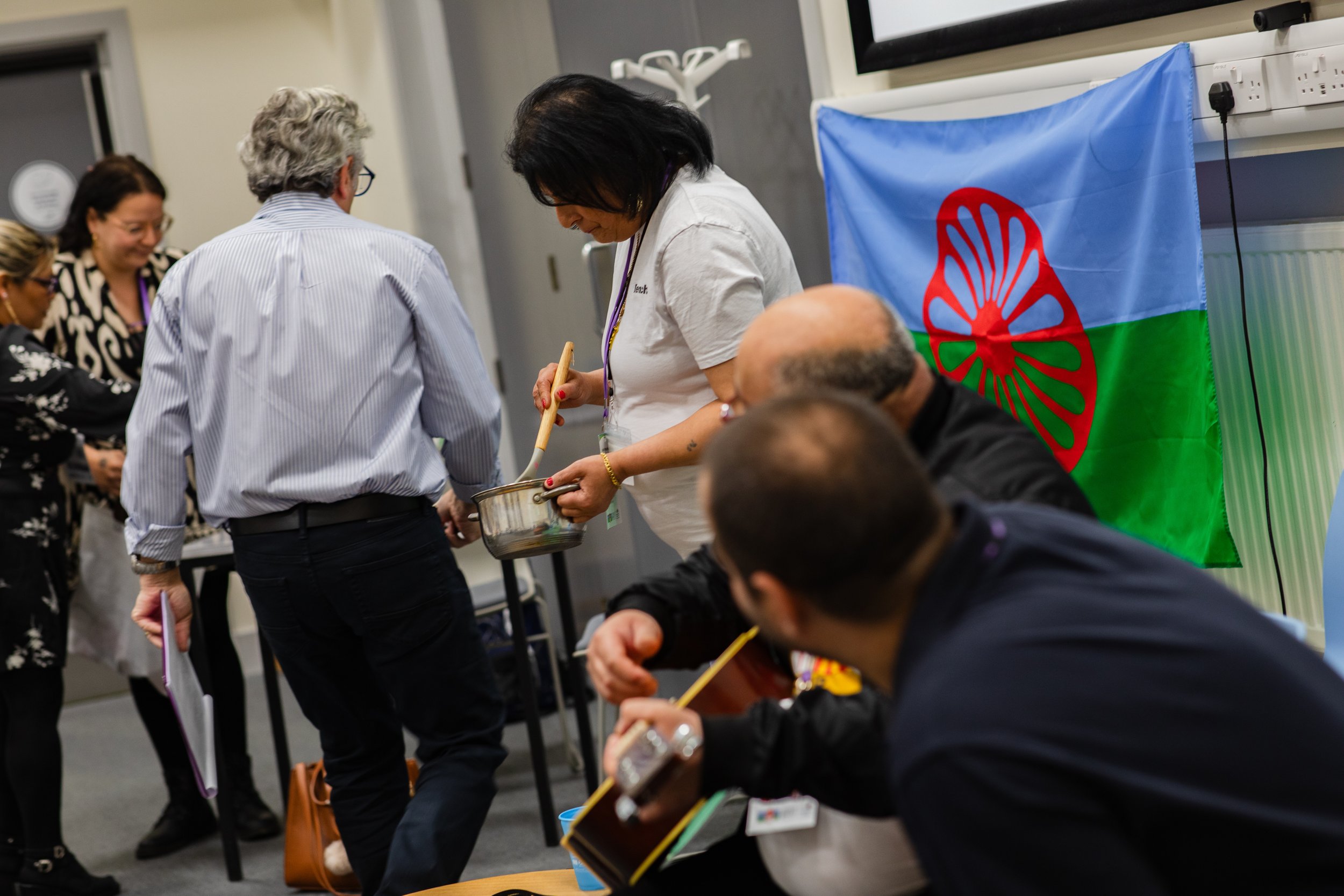
Storytelling event exploring place-based healthy ageing interventions for the Roma community in Govanhill, held at the Ramshorn, University of Strathclyde, Glasgow, on 5 June 2026.
For a few hours, everyday worries seemed to fade into the background. The conversations became lighter, stories flowed naturally and people connected through humour as much as through shared experiences. I realised how rarely I had seen that side of them, not because it didn't exist, but because the circumstances in which we usually met rarely allowed it to emerge.
It reminded me that no one should ever be defined solely by the challenges they face. Behind every welfare appointment is someone with memories, humour, friendships, hopes and an extraordinary capacity for resilience.
Community has always been one of the Romanian Roma community's greatest strengths, and I was reminded of that throughout the project.
Shortly after one of our workshops, a member of the community sadly passed away. Without hesitation, neighbours, friends and relatives came together to support the family, helping organise funeral arrangements and ensuring their loved one could return to Romania. It was one of many moments that reminded me how deeply connected this community already is.
RomaPlaceAge did not create those relationships.
It strengthened them.
The project created opportunities for people who already cared about one another to spend time together in different ways—sharing stories, learning together and discovering common experiences that deepened existing friendships.
One of my favourite moments came when four of project’s co-researchers travelled to Peterborough to meet other RomaPlaceAge participants.
At first glance, it might seem like a simple trip.
But it represented much more than travelling to another city.
Most Roma community members rarely leave Govanhill. Their daily lives revolve around family, work and the challenges of everyday life. Travelling to Peterborough meant stepping outside familiar surroundings, meeting people they had never met before and discovering that their experiences were shared by others living hundreds of miles away.
It was about expanding horizons.
It was about building confidence in unfamiliar environments.
It was about meeting people like themselves and realising:
We are not alone.
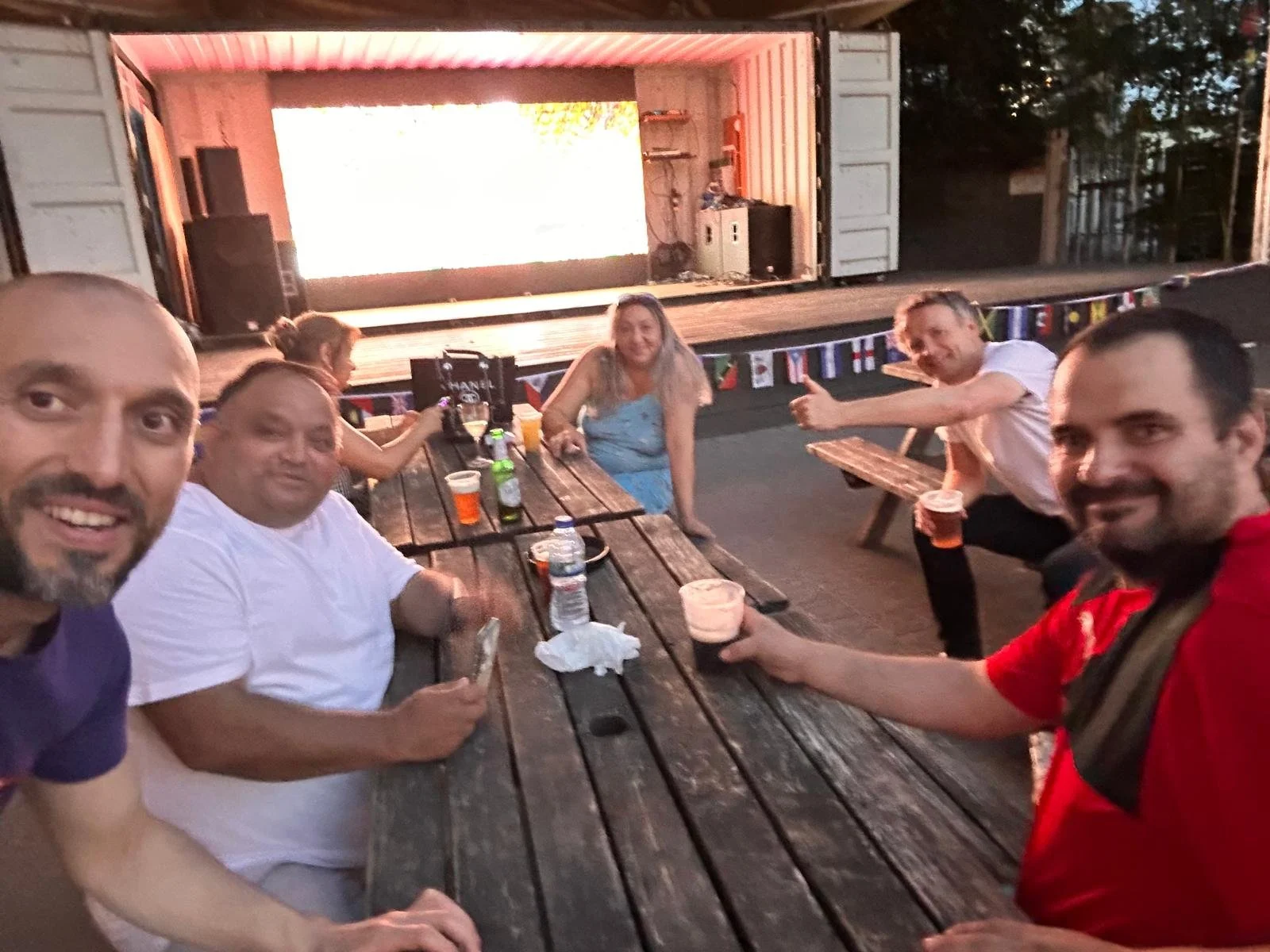
Project team visiting Peterborough on 25 June 2026, including Roma co-researchers and other collaborators. From left to right: Sasho Marinov, Florin Covaci, Jana Puskova (back), Helena Sandorova (back), Ryan Woolrych, and Costica Iacovita (front right).
They returned with new friendships, new ideas and a renewed sense of pride in being part of something bigger than their own neighbourhood. Watching them speak about the trip afterwards, I realised that sometimes the greatest impact of a project isn't found in research findings or reports. It is found in moments that allow people to imagine possibilities beyond the boundaries of their everyday lives.
Looking back, I realise that RomaPlaceAge became much more than a research project.
It created opportunities for people to be heard, to connect, to reflect, to laugh and to recognise the value of their own experiences. It strengthened relationships that already existed while opening doors to new ones. It reminded participants that their stories matter—not because they fit within a research project, but because they are part of our shared understanding of community, belonging and ageing.
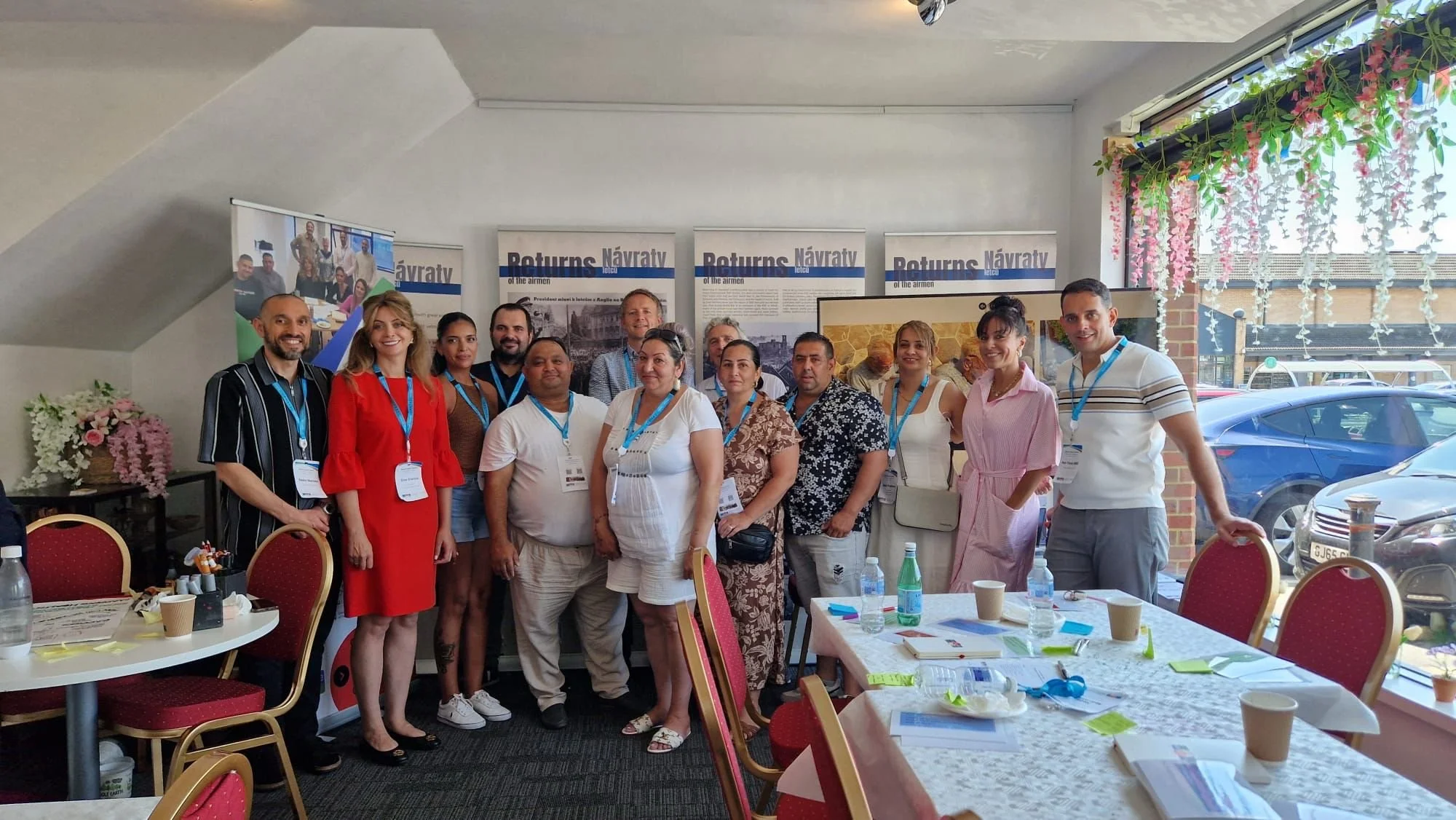
Storytelling event exploring place-based interventions for healthy ageing in Peterborough, 26 June 2026.
I am Romanian, but I am not Roma.
I will always remain an outsider in that sense.
Yet over six years of working together, many of the people I first met through welfare advice have become friends I care deeply about. Watching them become co-researchers reminded me that meaningful participation isn't about giving people a voice—they already have one. Sometimes it is about creating spaces where that voice is genuinely listened to.